Key Takeaways
Bang Niew Shrine: A Historical and Cultural Landmark
Bang Niew Shrine, also known by several other names such as Tao Boo Geng Shrine, Arm Boo Tueng, Dhebrasi Foundation, or Chai Tueng Foundation, is a significant historical and cultural site in Phuket, thailand. This shrine, deeply rooted in the local community’s traditions and beliefs, offers a window into the rich tapestry of cultural and religious practices that have shaped the region. In this article, we will explore the origins, significance, and transformations of Bang Niew Shrine in detail.
Origins and Historical Significance
Founding of the Shrine
Established in 1904, Bang Niew Shrine has a storied history that dates back over a century. The shrine’s origins are linked to a Chinese opera troupe known as "Gang Chai Yi Troupe," which traveled from China to perform in the area known then as Trok Mao Gao, now Soi Romanee. The troupe’s arrival coincided with the existence of a small shrine in the vicinity, leading to the installation of PraTienHooNguanSoi (Lao Yia), a holy statue, for the public to make merits.
Cultural Influence and Community Engagement
The shrine quickly became a focal point for community activities, fostering a tradition of religious observance and celebration that continues to this day. The establishment of a vegetarian festival and religious precept observance cemented the shrine’s role as a spiritual center. The local community’s unwavering faith in the shrine has led to significant participation in these activities, illustrating the shrine’s importance in maintaining cultural continuity.
Challenges and Resilience
The Shrine Fires
Despite its significance, Bang Niew Shrine faced challenges, notably two mysterious fires that broke out within a few years of each other. The first fire prompted the relocation of PraTienHooNguanSoi (Lao Yia) to Arm Bang Niew, the current site of the shrine. The second fire, its cause also unknown, resulted in another relocation of the statue to a new site opposite the previous one. These incidents highlighted the community’s resilience and dedication to preserving their spiritual heritage.
Expansion and Transformation
In response to the growing number of visitors and the need for a more substantial structure, the community, led by Khun Lerdpatarukagreew, undertook the expansion of the shrine. The transformation from a wooden structure with a Nipa palm roof to a concrete building marked a new era for Bang Niew Shrine. This expansion ensured that the shrine could accommodate the increasing number of devotees while preserving its spiritual essence.
Architectural and Cultural Features
Design and Symbolism
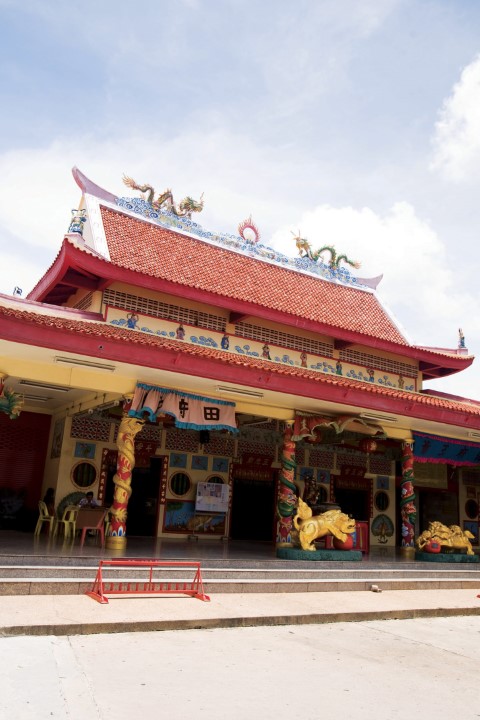
The architecture of Bang Niew Shrine is rich in symbolism and reflects traditional Chinese design elements. The entrance is adorned with an intricately carved arc featuring a Chinese dragon, a symbol of power and good fortune. Upon entering the shrine, visitors are greeted by two majestic lion statues, and the walls are adorned with vibrant paintings depicting Chinese creatures believed to bring luck, as well as scenes from Chinese literature.
The Dragon Pillars
One of the most striking features of the shrine is its dragon pillars. Each pillar is intricately carved and painted, adding to the shrine’s vibrant and colorful appearance. These pillars are not only decorative but also carry deep cultural significance, representing strength, protection, and prosperity.
The Shrine’s Role in Modern Times
A Hub for Cultural Celebrations
Today, Bang Niew Shrine continues to play a vital role in the cultural and spiritual life of the local community. It is a hub for various cultural celebrations, including the annual vegetarian festival, which draws participants from across the region. These events serve as a testament to the enduring legacy of the shrine and its ability to adapt to changing times while preserving its core traditions.
A Place of Unity and Faith
The shrine remains a place of unity, bringing together people of all ages and backgrounds to partake in shared rituals and festivities. Its continued relevance in modern times underscores the importance of cultural heritage and the ways in which historical sites contribute to a community’s identity and cohesion.
Conclusion
Bang Niew Shrine stands as a testament to the resilience and enduring faith of the community that has nurtured it for over a century. Its rich history, architectural beauty, and role in cultural preservation make it a vital part of Phuket’s heritage. As a symbol of unity and spiritual devotion, Bang Niew Shrine continues to inspire and attract those seeking to connect with the past while celebrating the present.
Address And Location:
Talat Yai Mueang Phuket Phuket 83000