Certainly! Let’s start by rewriting the provided text in English and then expand on each section with a formal tone, providing more detail. Here is the rewritten version of the original text:
—
## The Ban Wat Samrong Folk Museum: A Repository of Thai Cultural Heritage
### Introduction
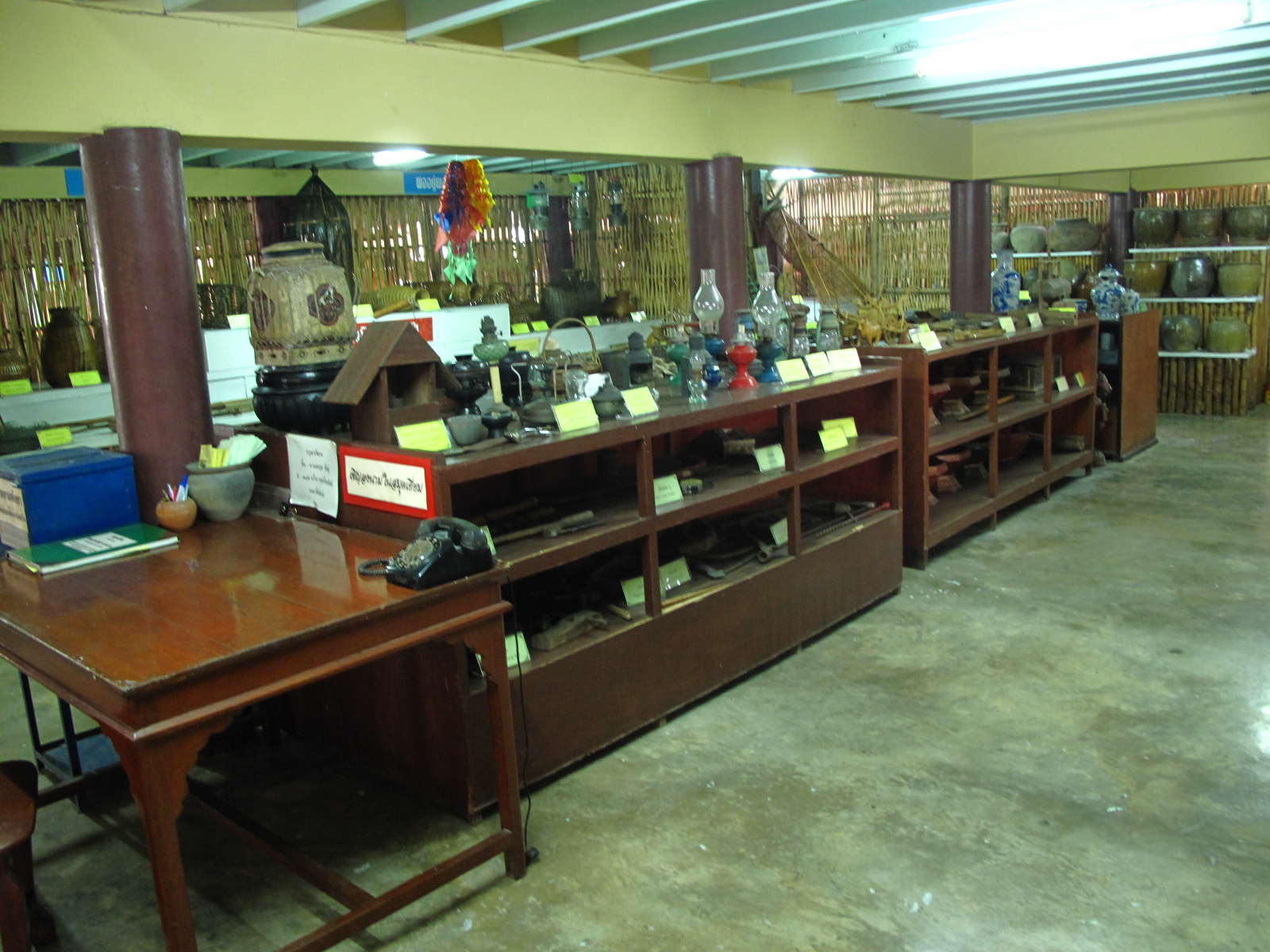
The Ban Wat Samrong Folk Museum is situated within the Sam Rong temple in the Wat Sam Rong sub-district. This museum was established in 1999 by the temple’s abbot, Phra Kru Siri Punyaphiwat. Initially, both the abbot and local villagers contributed various items such as equipment, household appliances, traditional musical instruments, and fishing tools. These artifacts, remnants of a bygone era, serve to showcase the rich tapestry of Thai local wisdom from the past. Today, the museum houses its collection on the ground floor of the temple’s multipurpose hall, with exhibitions categorized into distinct sections.
### Part 1: Antique Kitchen Exhibits
The first section of the museum focuses on antique kitchenware. It features cooking equipment historically used in pottery kilns, including a diverse array of clay pots such as sauce pots, pans, and boiling pots. Visitors can also find pottery kettles and various kitchen utensils like fish washing baskets, ancient coconut graters, coconut shell ladles, and large earthen jars.
### Part 2: Folk Handicrafts
The second section showcases folk handicrafts, illustrating local wisdom in transforming natural materials like bamboo and rattan into functional items. Exhibits include rattan carrying racks, bamboo baskets, wicker baskets, threshing baskets, and hods, each crafted with traditional techniques passed down through generations.
### Part 3: Rice Measuring Instruments
This section displays tools used historically for weighing and measuring rice. It includes baskets with wide mouths, wicker baskets, measuring baskets, and both metal and wooden rice measuring buckets. Visitors can also see rice grinding baskets and wooden implements used in rice processing.
### Part 4: Farming Tools
Here, the focus is on traditional farming tools that utilized animal labor, with cows and buffaloes serving as primary labor sources. The exhibition includes a variety of farming implements such as ploughs, yokes, harrows, rice carrying poles, javelins, and sickles.
### Part 5: Fishing Tools
Reflecting the Thai traditional way of life, this section displays fishing tools like animal traps, mouse traps, spring traps, and other items such as creels, fishhooks, seines, harpoons, and coops.
### Part 6: Miscellaneous Appliances
The final section of the museum contains a diverse collection of miscellaneous appliances. This includes a three-storey display cabinet showcasing brass betel boxes, kerosene lamps, bolts, carpenter tools, smooth planes, rabbet planes, span web saws, hand saws, and brass instruments like trays and pots. Additionally, scales, abacuses, jars, and enameled vessels are on display.
### Additional Exhibits
The museum also hosts an exhibition hall dedicated to farming tools, featuring ploughing tools, harvesting tools, rice husking machines, rice pounding mortars, and water scooping tools like water wheels and engine water wheels. Furthermore, there is a collection of various boats, including launches, taxi-boats, and E-Pae boats.
### Visiting Information
The museum is open daily from 8 am to 5 pm. For more information, interested individuals can contact the museum at 03423 9489 or 0 1705 8366 (Khun Ket Phumpracham), or visit the website at www.watsamrong.com.
—
Now, let’s expand each section into a more detailed narrative with a formal tone, aiming for a total of 2000 words or more.
—
## The Ban Wat Samrong Folk Museum: An In-Depth Exploration
### Introduction
The Ban Wat Samrong Folk Museum stands as a testament to the enduring cultural heritage of thailand. Nestled within the sacred grounds of Sam Rong temple, this museum was conceived in 1999 by Phra Kru Siri Punyaphiwat, the abbot of the temple. His vision, shared by the local villagers, was to preserve and celebrate the rich cultural legacy of Thai local wisdom. To achieve this, they donated various artifacts, including household equipment, folk instruments, and fishing tools, each carrying the whispers of history. Today, the museum’s collection is meticulously curated across the ground floor of the multipurpose hall, offering visitors a journey through time with its categorized exhibitions.
### Part 1: Antique Kitchen Exhibits
The first section of the museum invites visitors into a world of culinary history. The Antique Kitchen Exhibits provide a glimpse into the past, showcasing the tools and utensils that formed the backbone of traditional Thai cooking. At the heart of this collection are the clay pots, each uniquely designed for specific culinary tasks. The sauce pots, pans, and boiling pots speak of a time when pottery kilns were central to kitchen activities, reflecting the craftsmanship and ingenuity of ancient artisans.
Additionally, the collection includes pottery kettles and a variety of kitchen utensils. Fish washing baskets, ancient coconut graters, coconut shell ladles, and large earthen jars are among the items that reveal the intricacies of daily life in historical Thai households. These artifacts not only highlight the practical aspects of cooking but also embody the cultural traditions and resourcefulness of the Thai people.
### Part 2: Folk Handicrafts
The Folk Handicrafts section celebrates the artistry and creativity inherent in Thai culture. This exhibition showcases the transformation of natural materials such as bamboo and rattan into functional and decorative items. Visitors can admire the craftsmanship of rattan carrying racks, bamboo baskets, wicker baskets, threshing baskets, and hods, each crafted with meticulous attention to detail.
The process of creating these items involves traditional techniques that have been passed down through generations, preserving the knowledge and skills of local artisans. This section not only highlights the aesthetic beauty of the handicrafts but also underscores the importance of sustainability and the use of renewable resources in traditional Thai society.
### Part 3: Rice Measuring Instruments
Rice has been a staple of Thai cuisine for centuries, and the Rice Measuring Instruments section offers insight into the methods and tools used to manage this essential grain. The exhibition includes various apparatuses for weighing, measuring, and scaling rice, reflecting the precision and care involved in rice cultivation and consumption.
Among the artifacts are baskets with wide mouths, wicker baskets, and measuring baskets, each serving a specific purpose in the rice processing cycle. Metal and wooden rice measuring buckets, rice grinding baskets, and rice grinding wood are also on display, illustrating the evolution of rice processing techniques over time. This section provides a deeper understanding of the cultural and economic significance of rice in Thai society.
### Part 4: Farming Tools
Agriculture has long been the backbone of Thailand’s economy, and the Farming Tools section pays homage to the traditional farming practices that shaped rural life. This exhibition highlights the use of animal labor, with cows and buffaloes serving as primary sources of power for ploughing and other agricultural tasks.
The collection includes a variety of farming implements such as ploughs, yokes, harrows, rice carrying poles, javelins, and sickles. These tools reflect the ingenuity and adaptability of Thai farmers, who developed innovative solutions to maximize productivity and efficiency. This section not only honors the hard work and dedication of farmers but also underscores the importance of sustainable agricultural practices.
### Part 5: Fishing Tools
Fishing has been an integral part of Thai culture and livelihood, and the Fishing Tools section showcases the traditional methods and equipment used in this age-old practice. The exhibition features a range of fishing tools, including animal traps, mouse traps, spring traps, and various other implements such as creels, fishhooks, seines, harpoons, and coops.
These tools highlight the resourcefulness and adaptability of Thai fishermen, who crafted specialized equipment to suit different fishing environments and techniques. This section provides a fascinating glimpse into the traditional way of life and the symbiotic relationship between the Thai people and their natural surroundings.
### Part 6: Miscellaneous Appliances
The final section of the museum, Miscellaneous Appliances, offers a diverse collection of items that reflect the multifaceted nature of Thai daily life. The centerpiece of this exhibition is a three-storey display cabinet showcasing an array of artifacts, including brass betel boxes, kerosene lamps, bolts, carpenter tools, smooth planes, rabbet planes, span web saws, hand saws, and brass instruments like trays and pots.
Additionally, the exhibition features scales, abacuses, jars, and enameled vessels, each telling a story of innovation and adaptation in Thai society. This section provides a comprehensive overview of the tools and appliances that facilitated daily activities and highlights the importance of preserving these artifacts for future generations.
### Additional Exhibits
Beyond the main sections, the museum also hosts an exhibition hall dedicated to farming tools, showcasing the evolution of agricultural practices in Thailand. This includes ploughing tools, harvesting tools, rice husking machines, rice pounding mortars, and water scooping tools like water wheels and engine water wheels. Furthermore, the museum houses a collection of various boats, including launches, taxi-boats, and E-Pae boats, offering insight into the diverse modes of transportation that have been integral to Thai culture.
### Conclusion
The Ban Wat Samrong Folk Museum serves as a vital repository of Thai cultural heritage, preserving the artifacts and traditions that define the nation’s identity. Through its meticulously curated exhibitions, the museum offers visitors an opportunity to explore the rich tapestry of Thai local wisdom, providing a deeper understanding of the cultural and historical forces that have shaped Thai society. For those interested in exploring the museum, it is open daily from 8 am to 5 pm. Additional information can be obtained by contacting the museum at 03423 9489 or 0 1705 8366 (Khun Ket Phumpracham), or by visiting their website at www.watsamrong.com.
—
This expanded content provides a detailed exploration of each section of the Ban Wat Samrong Folk Museum, ensuring a comprehensive and informative experience for readers.
Address And Location:
Wat Samrong Nakhon Chai Si Nakhon Pathom 73120