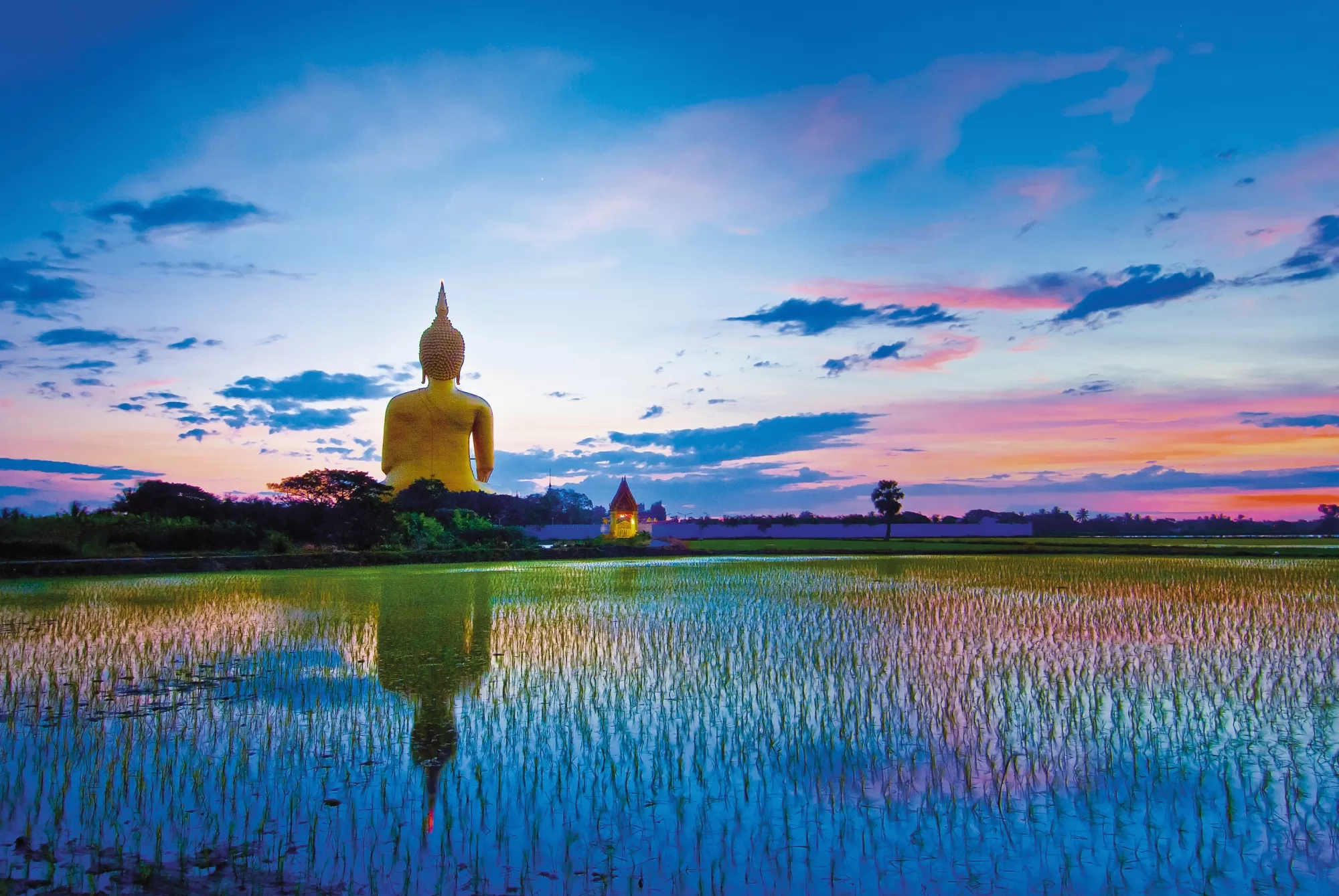
Heading 2: Highlights of Wat Muang
Wat Muang, located in Mu 6, Tambon Hua Taphan, is a temple that offers several must-see highlights. One of the most notable features of this temple is the Ubosot, also known as the ordination hall, which is surrounded by the largest lotus petals in the world. These lotus petals create a beautiful and serene atmosphere, adding to the spiritual ambiance of the temple.
Another highlight of Wat Muang is the Wihan Kaeo, a hall that houses a museum on its ground floor. This museum is open on weekends from 9.00 am to 5.00 pm and displays a variety of sacred objects, antiques, and figures of nationally venerated monks. Visitors can learn about the rich history and cultural significance of these artifacts.
Heading 3: The Museum at Wihan Kaeo
The museum located on the ground floor of Wihan Kaeo is a treasure trove of cultural and historical artifacts. It showcases sacred objects that hold great religious significance, such as ancient scriptures, statues, and relics. These artifacts provide a glimpse into thailand‘s rich spiritual heritage and the devotion of its people.
In addition to the religious artifacts, the museum also features exhibits on the history of Wat Muang and its role in the community. Visitors can learn about the temple’s founding, its architectural significance, and the various rituals and ceremonies that take place within its walls.
One of the highlights of the museum is the first and largest silver holy Buddha image in the country. This image was created to commemorate the 50th anniversary of His Majesty the King’s accession to the throne. It is a masterpiece of craftsmanship and serves as a symbol of the deep reverence and devotion of the Thai people towards their monarchy.
Heading 3: Depictions of Heaven and Hell
Within the temple compound of Wat Muang, visitors can find depictions of heaven and hell. These intricate and detailed artworks portray the rewards and punishments that await individuals in the afterlife, based on their actions during their earthly existence. These depictions serve as a reminder of the importance of leading a virtuous and righteous life.
The portrayal of heaven showcases a paradise filled with celestial beings, where peace and tranquility reign. It is a place of eternal happiness and bliss, reserved for those who have lived a righteous life and followed the teachings of Buddhism.
On the other hand, the depiction of hell is a stark contrast. It portrays the gruesome and torturous punishments that await those who have committed evil deeds. The vivid imagery serves as a cautionary tale, reminding visitors of the consequences of their actions and the importance of leading a moral and ethical life.
Heading 3: Thai and Chinese Deity Paradises
Another fascinating feature of Wat Muang is the presence of Thai and Chinese deity paradises within the temple compound. These paradises are dedicated to the worship of specific deities from Thai and Chinese mythology.
The Thai deity paradise is a sacred space where worshippers can pay homage to various Thai gods and goddesses. It is adorned with intricate sculptures and elaborate decorations, creating a visually stunning environment for spiritual contemplation and prayer.
Similarly, the Chinese deity paradise is a place of worship for Chinese gods and goddesses. It showcases the rich cultural heritage of the Chinese community in Thailand and provides a space for devotees to connect with their ancestral roots.
Heading 3: Statue of KuanIm
One of the most prominent features of Wat Muang is the towering statue of KuanIm, a Chinese female goddess. This statue stands as a symbol of compassion, mercy, and protection. KuanIm is revered by both Thai and Chinese communities and is often regarded as the embodiment of motherly love and care.
The statue of KuanIm is an awe-inspiring sight, reaching a height of over 90 meters. It is the tallest statue of KuanIm in Thailand and serves as a focal point for devotees and visitors alike. Many come to Wat Muang to offer prayers and seek blessings from this benevolent deity.
Heading 3: The Thai-Burmese Battle in Wiset Chai Chan
Within the temple compound, there are also figures that narrate the history of the Thai-Burmese battle in Wiset Chai Chan. These figures depict the bravery and sacrifice of the Thai warriors who defended their homeland against the Burmese invasion.
The Thai-Burmese battle holds great historical significance and serves as a reminder of Thailand’s resilience and determination in the face of adversity. The figures provide a visual representation of the heroic acts and the struggles faced by the Thai people during this period.
Heading 2: How to Get to Wat Muang
To visit Wat Muang, travelers can follow the Ang Thong-Wiset Chai Chan route (Highway No. 3195) and turn at Km 29. From there, it is only a short distance of 1 kilometer to reach the temple. The temple is conveniently located approximately 8 kilometers from downtown, making it easily accessible to visitors.
Heading 2: Conclusion
Wat Muang is a temple that offers an enriching and spiritually uplifting experience for visitors. With its various highlights, including the Ubosot, the museum at Wihan Kaeo, depictions of heaven and hell, Thai and Chinese deity paradises, the statue of KuanIm, and the Thai-Burmese battle figures, the temple provides a unique insight into the religious and cultural traditions of Thailand.
Visiting Wat Muang allows individuals to immerse themselves in the rich history and spirituality of the country, offering a deeper understanding of Thai culture and beliefs. The temple’s serene atmosphere and stunning architectural features create a peaceful and contemplative environment for all who visit.
Whether one is seeking a place for spiritual reflection, cultural exploration, or simply a glimpse into Thailand’s fascinating past, Wat Muang is a destination that should not be missed. Its diverse highlights and informative exhibits make it a truly remarkable and memorable experience for all who have the privilege of visiting.
Address And Location:
Moo 6 Phai Cham Sin Wiset Chai Chan Ang Thong 14110