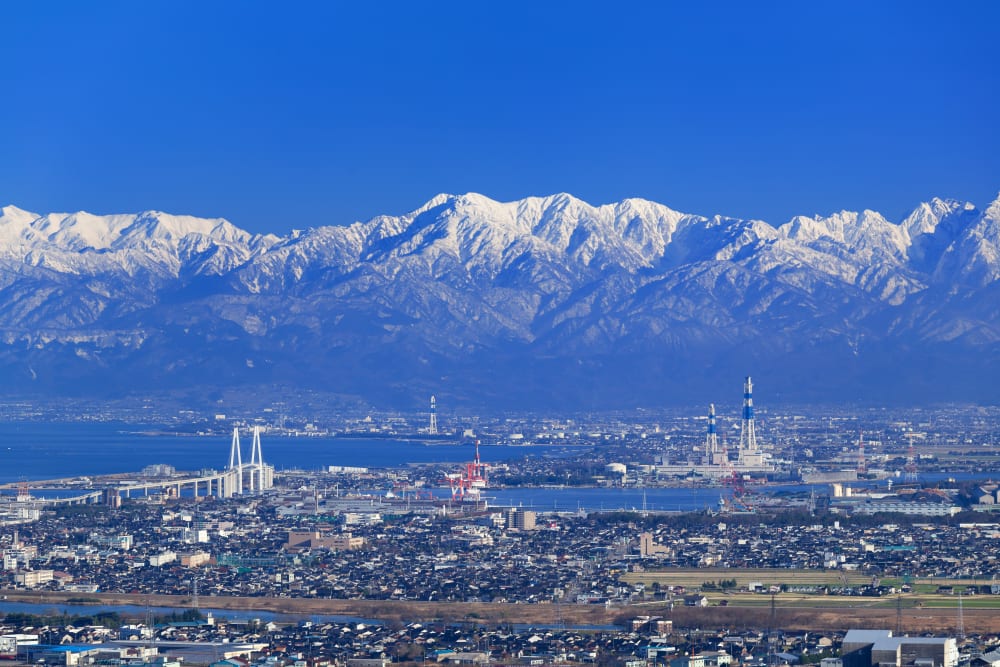
A Majestic Mountain Range
The Tateyama Mountain Range, located in Toyama Prefecture, is a majestic and breathtaking sight. It consists of two major peaks, Tateyama and Tsurugi, which form a magnificent backdrop to the east of the prefecture. Stretching out like a jagged saw blade, the Tateyama Mountain Range offers a challenging climb for travelers who are brave and adventurous enough to take on the journey.
Don’t Miss
One of the highlights of the Tateyama Mountain Range is the famed mountain shrine of Oyama, which sits atop Tateyama. This sacred shrine is a must-visit for those seeking a spiritual experience in the mountains. Additionally, a two-day trek to the peak of the legendary Mt. Tsurugi is another unforgettable experience that should not be missed. For those looking for a longer adventure, an epic week-long trek from Tateyama to Kamikochi, japan‘s most celebrated mountain course, is highly recommended.
How to Get There
The most common way to access the major peaks of the Tateyama Mountain Range is through the Tateyama Kurobe Alpine Route, with starting points at either Tateyama Station on the Toyama side or Ogizawa Station in neighboring Nagano Prefecture. From Toyama, travelers can take the Toyama Densetsu to Tateyama Station, while from Omachi Station, they can go to Ogizawa Station and then proceed to Murodo via the Alpine Route.
Geography
The Tateyama Mountain Range is part of the northernmost section of Japan’s Hida Mountain Range, also known as the “Northern Japan Alps.” It is located between the Kurobe Dam, which is situated in the valley between the two segments of the range. To the east of the Tateyama Mountain Range lies the Ushiro Tateyama Mountain Range, which borders Nagano Prefecture and is famous for its ski resorts in Hakuba. The Tateyama Mountain Range, on the other hand, is entirely within Toyama Prefecture and holds great significance in the identity of the region. Tsurugi, the most visually distinctive peak, sits proudly in the center, while Tateyama, although gentler in appearance, is actually taller. Both peaks are major highlights of the Chubu Sangaku National Park.
Toyama’s Holy Mountain
Tateyama, often referred to as a single mountain, is actually comprised of three peaks. The best-known peak, Oyama, is the second highest. Alongside Fuji and Hakusan, Tateyama is recognized as one of Japan’s Three Holy Mountains. According to legend, in the eighth century, a hunter chased a wounded bear all the way to Murodo, where he witnessed the bear transform into a golden Buddha. The hunter then became a priest and was tasked with tending to this newly sacred place. Today, the mountaintop shrine of Oyama is one of the main attractions of Tateyama. Due to its convenient location and relatively easy ascent, Tateyama is particularly popular during the warmer months. However, it is worth noting that the crowds can sometimes be more challenging to navigate than the actual course. To make the journey more manageable, it is advisable to stay at a mountain lodge or hotel along the way. While it is possible to do a day trip to Tateyama, it may be tight on timing.
The Big One
Tsurugi, the other major peak in the Tateyama Mountain Range, was the last peak in Japan to be summited. It wasn’t until 1906 that officials from Japan’s Land Survey Department successfully reached the top. Many failed attempts prior to their success added to the mountain’s reputation for danger. Upon reaching the summit, the officials were surprised to discover a sword and staff dating back to before the 12th century. The mystery of how these items ended up on the mountain remains unsolved.
Compared to Mt. Tsurugi, Tateyama is a significantly easier mountain to climb. While it is not considered a “technical climbing” mountain, it does require climbers to navigate a well-maintained network of chains and ladders, which reduces the need for ropes and other climbing gear. Even with the aid of sturdy chains, climbers will find themselves negotiating exposed ridges with sheer drops below. Most attempts to climb Tsurugi begin at Murodo, where hikers can set off on foot for the Kenzanso Mountain Lodge. This lodge, open from July to mid-October, serves as an ideal stopover point for a 10 to 12-hour hike. Starting early in the morning allows hikers to return to Murodo in the afternoon and catch the last bus back to civilization.
Tateyama to Kamikochi
One of Japan’s premier treks is the six to seven-day hike from Tateyama to Kamikochi, or vice versa. After starting from Murodo, hikers head east towards Mt. Tateyama and beyond. The basic breakdown of the hike is as follows:
Day One: Murodo to Goshikigahara, a six to seven-hour hike that offers the opportunity to climb Mt. Tateyama if weather conditions permit.
Day Two: Goshikigahara to Yakushidake Sanso, an eight to ten-hour hike that includes another famous mountain, Yakushidake.
Day Three: Yakushidake Sanso to Kurobegoro Goya, a six to eight-hour hike that includes yet another famous mountain, Kurobegorodake.
Day Four: Kurobegoro Goya to Mt. Yarigatake, an eight to ten-hour hike that ends at another iconic Japanese peak.
Days Five and Six: Mt. Yarigatake to the Hotakadake Sanso to Kamikochi, an 11 to 15-hour hike that is considered the most renowned multi-peak excursion in Japan. It is important to note that this part of the journey, known as the Daikiretto Traverse, can be genuinely dangerous, especially for beginners.
When to Go
All of the mentioned hikes are typically done between July and early October. However, experienced and well-equipped hikers may choose to climb Tateyama as early as late April, after the Alpine Route has opened. Crampons are required, and ice axes are recommended. It is crucial to be adequately prepared for cold weather conditions. Casual hikers should plan their hike for July to mid-October. As for Tsurugi, the same rules apply, but early spring hiking is much more dangerous on this more challenging mountain. For the Tateyama to Kamikochi hike, mid-July to early October is the best time to go. Earlier in the season, residual snow can pose challenges for those without proper equipment, and some huts may not be open, which can discourage amateur hikers.
In conclusion, the Tateyama Mountain Range in Toyama Prefecture offers a majestic and challenging experience for mountain enthusiasts. With its stunning peaks, sacred shrines, and epic trekking routes, it is a must-visit destination for those seeking adventure and natural beauty. Whether climbing Tateyama and Tsurugi, exploring the range’s diverse geography, or embarking on a multi-day hike to Kamikochi, the Tateyama Mountain Range promises unforgettable experiences and breathtaking views. So pack your gear, prepare for an adventure, and immerse yourself in the awe-inspiring beauty of the Tateyama Mountain Range.
Address And Maps Location:
Toyama-ken
Find Location And Direction On Google Maps
Subscribe, follow travelbloggerindonesia.com