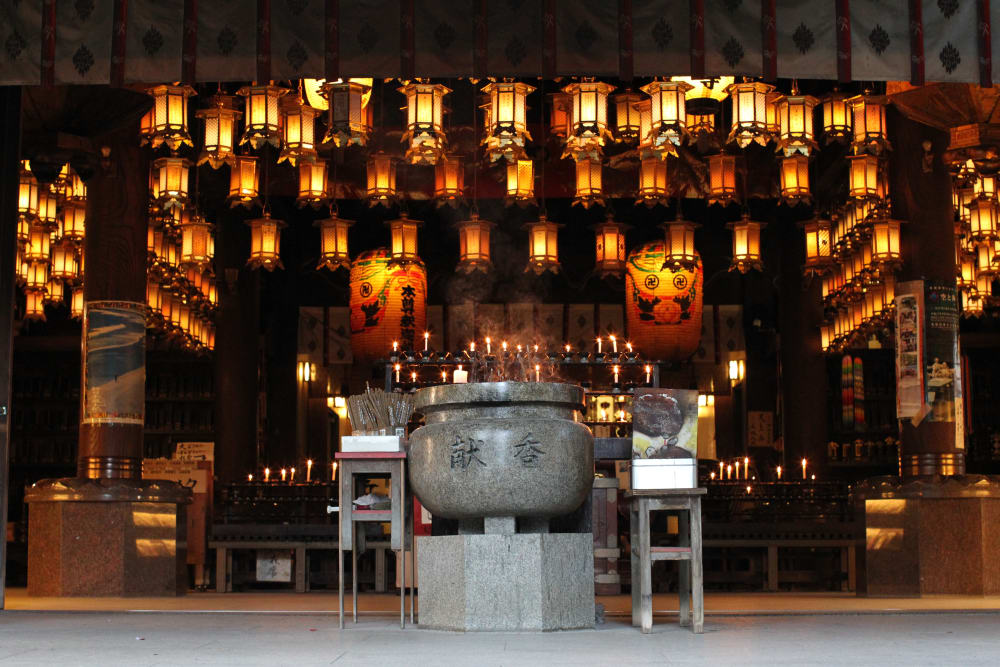
The beginning and end of Shikoku’s famous pilgrimage route
Ryozenji Temple, located in the town of Naruto near Tokushima City, is the starting point of the Shikoku Pilgrimage. This epic 1,400-kilometer journey takes pilgrims to 88 temples scattered across Shikoku. It is a spiritual experience that attracts both devout followers of Buddhism and curious travelers seeking a unique adventure.
The Shikoku Pilgrimage, also known as the Shikoku Henro, is a traditional pilgrimage route that traces the footsteps of Kukai, the founder of esoteric Shingon Buddhism. All 88 temples on the pilgrimage are associated with Kukai, and Ryozenji Temple has a deep connection to Koyasan in Wakayama Prefecture. Koyasan is Shingon Buddhism’s holiest site and home to Kukai’s mausoleum, where he is considered to rest in eternal meditation. Starting the pilgrimage at Ryozenji is considered auspicious due to this connection.
The traditional route, which circumnavigates Shikoku, generally takes about two months to complete on foot. It is a physically demanding journey that requires dedication and endurance. Pilgrims walk long distances each day, often carrying a walking stick and wearing the traditional white robes and woven hats. The pilgrimage is not only a test of physical strength but also a spiritual journey of self-reflection and inner transformation.
Ryozenji Temple serves as both the start and end of the Shikoku leg of the pilgrimage. Many pilgrims complete their journey at Koyasan, and Ryozenji Temple provides a fitting conclusion to their spiritual quest. The temple shop sells the necessary pilgrimage essentials, including white robes, woven hats, walking sticks, and other supplies. Even if you are not embarking on the full pilgrimage, visiting Ryozenji Temple and immersing yourself in the atmosphere can be a meaningful experience.
The temple grounds of Ryozenji are beautiful and serene. As you enter through the intricate wooden gate, you are greeted by attractive gardens with a small waterfall and a large carp pond. The two-story pagoda adds to the picturesque setting. The grounds are often filled with white-clad pilgrims, creating a unique and photogenic scene. It is a place where you can capture the essence of the pilgrimage and witness the devotion of the pilgrims.
To reach Ryozenji Temple, you can take a 10-minute walk from Bando Station. If you are coming from Tokushima Station, you can take the JR Kotoku Line toward Takamatsu, and Bando Station is about 20 minutes away by train. The temple is easily accessible, allowing visitors to experience the spiritual ambiance without the commitment of the full pilgrimage.
The history of Ryozenji Temple dates back to the early eighth century, and it has served as the first temple on the pilgrimage route since at least 1687. It is a place steeped in religious significance and cultural heritage. The temple’s long-standing presence adds to the pilgrimage’s authenticity and makes it a must-visit destination for both religious and cultural enthusiasts.
In conclusion, Ryozenji Temple holds great importance as the starting and ending point of the Shikoku Pilgrimage. It represents the spiritual journey undertaken by pilgrims who seek enlightenment and self-discovery. The temple’s connection to Koyasan and its role in the pilgrimage make it a significant site for devotees of Buddhism. Whether you choose to embark on the full pilgrimage or visit Ryozenji Temple as a cultural experience, it is a place that offers insight into japan‘s rich religious traditions and provides a unique opportunity for personal growth and reflection.
Address And Maps Location:
126 Bando Tsukabana Oasacho, Naruto-shi, Tokushima-ken
Find Location And Direction On Google Maps
Subscribe, follow travelbloggerindonesia.com