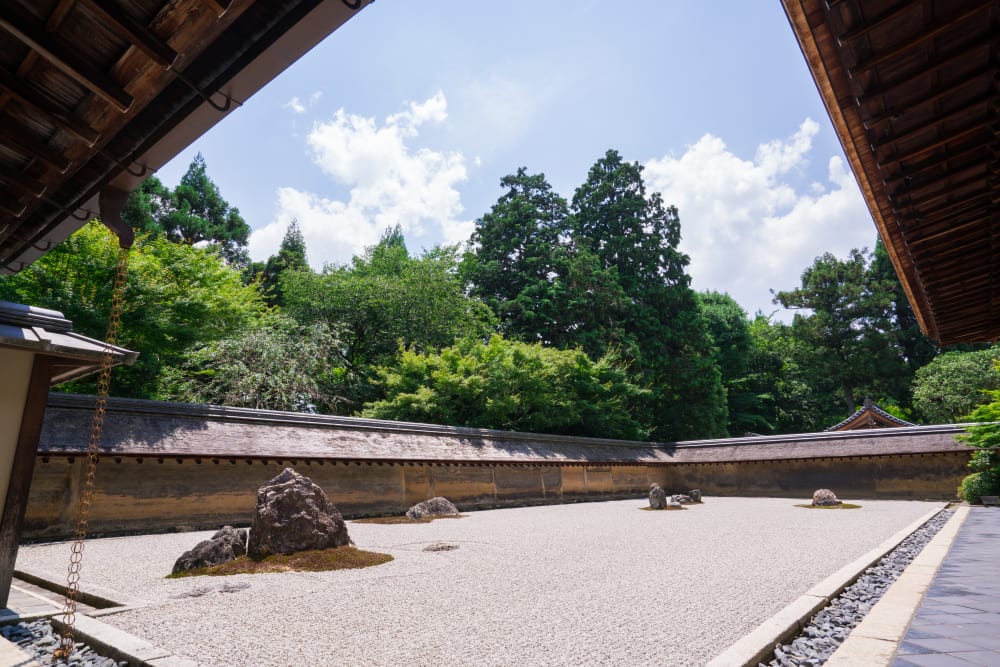
Fifteen stones and white sand to express the world of Zen
Ryoanji Temple Rock Garden, located in Kyoto, japan, is a renowned and iconic site that has captivated visitors from around the world. With its traditional architecture and serene gardens, Ryoanji Temple is a UNESCO World Heritage Site and a must-visit destination for anyone exploring Kyoto.
The origins of Ryoanji Temple can be traced back to the aristocratic Tokudaiji family, who initially built the temple as a villa. It was later passed on to Hosokawa Katsumoto, a deputy of the Shogun, who invited the priest Giten Genso to transform it into a Zen temple. The temple’s rock garden, which has gained international fame, was created by the highly respected Zen monk, Tokuho Zenketsu, during the Muromachi Period in the 15th century.
The rock garden at Ryoanji Temple is a masterpiece of simplicity and elegance. It consists of fifteen stones of various sizes placed atop a bed of white sand, all within a space of about 250 square meters. The garden’s design is deceptively simple, yet its meaning has been a subject of speculation and interpretation for centuries.
One theory suggests that the arrangement of the stones represents islets in an ocean or mountains in a sea of clouds. Another interpretation suggests that it depicts a tigress and her cubs crossing a river. However, the true meaning of the garden remains open to individual interpretation and imagination, much like the concept of Zen itself.
What makes the rock garden truly unique is the clever arrangement of the stones. No matter where the viewer stands, there is always one stone that remains hidden from view. This arrangement symbolizes the concept of perfection, as fifteen is considered the perfect number in Asian culture. It serves as a reminder that no person is perfect, and our limited perspectives prevent us from seeing the complete picture.
In addition to the rock garden, Ryoanji Temple offers other attractions worth exploring. One such attraction is a stone wash basin, known as a “tsukubai,” located in the small garden at the back of the priest’s chambers. The basin is designed to resemble an old Japanese coin, with four characters inscribed along its side. Individually, these characters hold no meaning. However, when combined with the central square, which represents the Japanese character for “mouth,” the four characters form the idea that “one knows that they have just what they need.” This clever verbal pun adds another layer of depth to the temple’s symbolism.
To fully appreciate the tranquility and beauty of Ryoanji Temple, it is recommended to visit early in the morning or just before closing time. During the day, the temple tends to attract large numbers of tourists, which can detract from the peaceful atmosphere. After spending time in contemplation at the rock garden, visitors can also explore the temple’s expansive traditional gardens or enjoy a meal of Kyoto-style tofu at Seigenin, a restaurant located within the temple grounds.
Accessing Ryoanji Temple is relatively easy, with both train and bus options available. The temple is a 10-minute walk north from Ryoan-ji Station on the Keifuku Kitano Line. Alternatively, visitors can take the #59 bus from Sanjo Keihan Station to the Ryoan-ji-mae bus stop, which is right in front of the temple. For convenient transportation within the city, one- and two-day passes are available, offering unlimited bus and subway rides.
Ryoanji Temple’s rock garden has not only captivated visitors but has also left a lasting impact on various art forms. It has been featured in numerous books and photographs and has even influenced the music of composer John Cage. Its timeless beauty and enigmatic symbolism continue to inspire and intrigue people from all walks of life.
In conclusion, Ryoanji Temple Rock Garden is a testament to the profound beauty and simplicity of Zen philosophy. Through its arrangement of fifteen stones and white sand, it invites contemplation and introspection. The garden’s enigmatic symbolism and its ability to evoke a sense of tranquility make it a must-visit destination for anyone seeking a deeper understanding of Japanese culture and spirituality.
Address And Maps Location:
13 Ryoanji Goryonoshita-cho, Ukyo-ku, Kyoto-shi, Kyoto-fu
Find Location And Direction On Google Maps
Subscribe, follow travelbloggerindonesia.com