A temple steeped in Chinese influence
Manpukuji Temple, located in Kyoto’s Uji region at the base of Mt Obaku, is a hidden gem that showcases a unique blend of Chinese and Japanese cultures. Founded in 1661 by a Chinese monk named Yinyuan Longqi, also known as Ingen Ryuki in Japanese, the temple stands out for its architectural style and the cultural traditions it upholds.
The temple’s construction reflects the Ming Dynasty era in China, with many of its structures built of teak, which is a rare material for Japanese temples. This blend of Chinese and Japanese elements makes Manpukuji Temple a truly extraordinary place to visit.
Quick Facts
Before diving into the rich history and cultural significance of Manpukuji Temple, let’s take a look at some quick facts about this unique destination:
1. Ingen and his successors brought new takes on art, calligraphy, diet, and medicine from the Asian continent.
2. The temple has two vegetarian restaurants, offering Chinese-style vegetarian meals known as fucha ryori.
How to Get There
To visit Manpukuji Temple, you can start your journey from Kyoto Station. From there, take the Nara Line to Obaku Station, which is just a seven-minute walk from the temple. The convenient transportation options make it easy for visitors to explore this hidden gem.
A dragon-shaped complex
Upon arriving at Manpukuji Temple, you will be enchanted by the dragon-shaped complex that stretches across the serene landscape. The temple’s layout resembles the mythical creature, with its buildings arranged in a way that evokes the majestic presence of a dragon.
The temple’s founder, Zen master Yinyuan Longqi, and his disciple Muyan established this unique architectural style, reflecting their Chinese heritage. It was not until the fourteenth priest took over that Japanese monks began running Manpukuji Temple, but the Chinese influence still remains strong.
Chinese traditions abide
Manpukuji Temple remains deeply rooted in Chinese traditions, preserving cultural practices and rituals that have been passed down through generations. One notable aspect is the enshrinement of sculptures created by Chinese artists, showcasing their incredible craftsmanship.
The priests at Manpukuji Temple continue to recite musical sutras in the Bonbai, or Indian, style, creating a distinctive atmosphere that sets the temple apart from other Japanese-style temples in Kyoto. Visitors can witness and experience the unique blend of Chinese and Japanese cultures firsthand.
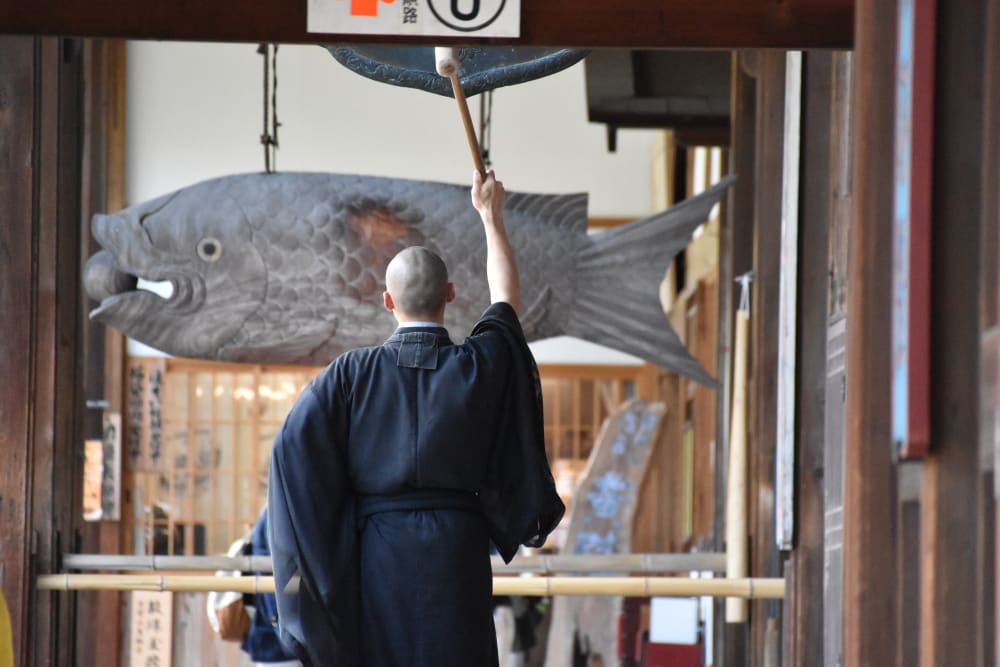
A wooden fish gong
One of the temple’s most intriguing features is its gyoban, a large flat wooden ornament shaped like a fish. This ornament serves as a gong, struck to mark meal times and sutra recitations. The sound of the wooden fish resonates throughout the temple, adding to its serene ambiance.
Vegetarian lunch
For those looking to indulge in a culinary experience, Manpukuji Temple offers fucha ryori, a Chinese-style vegetarian meal. To savor this unique dining experience, visitors are required to make a reservation at least three days in advance, and the meal is designed for a minimum of two people. This vegetarian feast allows guests to appreciate the artistry and flavors of Chinese cuisine while being surrounded by the temple’s tranquil atmosphere.
Recommended for You
While exploring Kyoto, there are other attractions nearby that are worth visiting. Two recommendations that complement a visit to Manpukuji Temple are Fushimi Momoyama Castle and Uji Bridge.
Fushimi Momoyama Castle, also known as Fushimi Castle, is a stunning historical site that showcases the power and beauty of feudal japan. With its impressive architecture and panoramic views, the castle offers a glimpse into Japan’s rich history.
Uji Bridge is another iconic landmark in Kyoto, located in the picturesque city of Uji. This wooden bridge spans across the Uji River, connecting the two sides of the city. Walking across the bridge allows visitors to appreciate the beauty of the surrounding nature and enjoy a peaceful stroll along the riverbanks.
Conclusion
Manpukuji Temple is a testament to the enduring cultural exchange between China and Japan. Its unique architecture, Chinese traditions, and vegetarian cuisine offer visitors a truly immersive experience. Whether you are interested in history, architecture, or simply seeking tranquility, a visit to Manpukuji Temple is sure to leave a lasting impression.
Address And Maps Location:
Sanbanwari-34 Gokasho, Uji-shi, Kyoto-fu
Find Location And Direction On Google Maps
Subscribe, follow travelbloggerindonesia.com