Attraction
Oita Prefecture, located in the Kyushu region of japan, is a fascinating destination for travelers seeking a unique and enriching experience. With its rich history, stunning natural beauty, and impressive Buddhist artwork, Oita offers a wide range of attractions that are sure to captivate visitors.
One of the must-visit attractions in Oita is the Fukiji Temple. This ancient temple, also known as the “Floating Temple,” is a true masterpiece of Buddhist architecture. Built in the 8th century, Fukiji Temple showcases the remarkable craftsmanship of the time. Its main hall, which houses a statue of the Eleven-faced Kannon, is considered one of the finest examples of wooden architecture in Japan. The intricate carvings and detailed paintings on the walls and ceilings are a testament to the skill and dedication of the craftsmen who built the temple.
Another popular attraction in Oita is the Kunisaki Peninsula. Known for its scenic beauty and spiritual significance, the peninsula is home to numerous temples and shrines. Visitors can explore the ancient Buddhist temples and admire the stunning views of the surrounding mountains and coastline. The tranquil atmosphere of the Kunisaki Peninsula provides a peaceful retreat for those seeking solace and spiritual enlightenment.
History
Oita Prefecture has a rich history that dates back thousands of years. The region’s history can be traced back to the Jomon period, which lasted from around 14,000 to 300 BCE. During this time, the area was inhabited by hunter-gatherer communities who left behind a legacy of pottery and other artifacts.
In the medieval period, Oita was ruled by powerful clans and served as an important center of trade and culture. The city of Oita, the prefectural capital, was founded during this time and became a thriving hub of commerce. Many historic buildings and landmarks from this period can still be seen in Oita today, such as the Usuki Stone Buddhas and the Takasakiyama Natural Zoological Garden.
During the Edo period, Oita was known for its production of high-quality porcelain. The region’s porcelain, known as “Oita-yaki,” gained popularity throughout Japan and even attracted the attention of foreign traders. Today, Oita is still renowned for its pottery and ceramics, and visitors can explore the traditional kilns and workshops where these exquisite pieces are made.
Buddhist Artwork
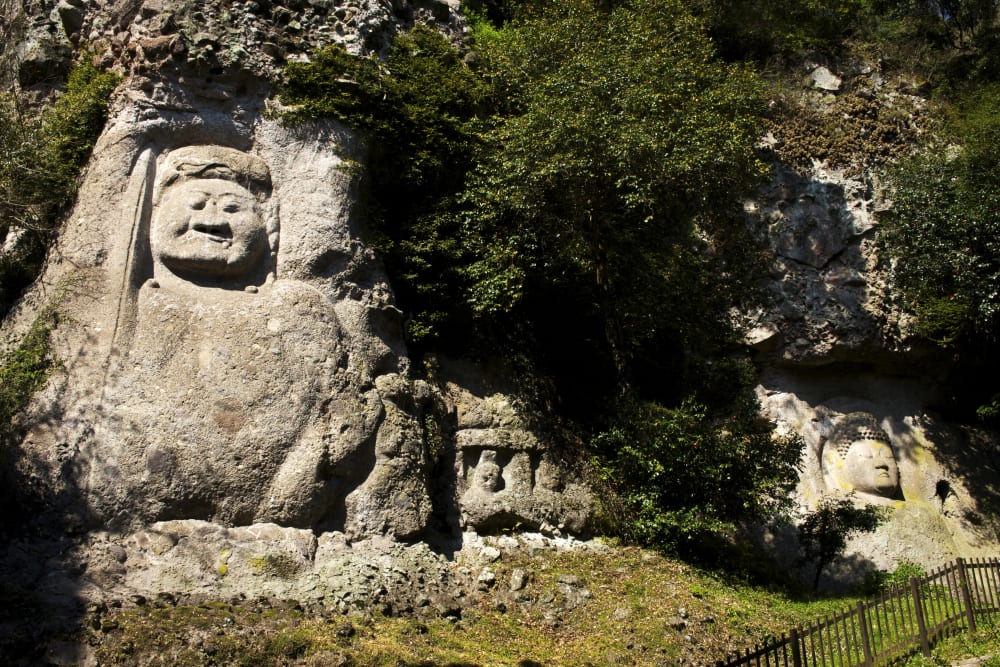
Oita Prefecture is also home to a wealth of Buddhist artwork, which reflects the region’s deep spiritual heritage. One of the most notable examples of Buddhist artwork in Oita is the Kumano Magai Butsu, a collection of stone Buddha statues carved into the cliffs of a mountain in Bungotakada. These statues, which date back to the 9th century, are considered national treasures and are a testament to the skill and devotion of the craftsmen who created them.
In addition to the Kumano Magai Butsu, Oita is also home to numerous Buddhist temples and shrines that house a variety of artistic treasures. The Usa Jingu Shrine, located in Usa City, is one such example. This Shinto shrine is dedicated to the god Hachiman, and its main hall features intricate wood carvings and beautiful paintings.
Another noteworthy Buddhist artwork in Oita is the stone garden at Ruriko-ji Temple in Yufu City. This Zen garden, known as the “Chisen-kaiyu-shiki-teien,” is designed to represent a miniature landscape and is considered one of the most beautiful stone gardens in Japan. Visitors can stroll through the garden and admire the carefully arranged rocks, trees, and moss that create a serene and harmonious atmosphere.
Overall, Oita Prefecture offers a unique blend of history, natural beauty, and Buddhist artwork. Whether you’re interested in exploring ancient temples, immersing yourself in the region’s rich history, or simply enjoying the stunning scenery, Oita has something to offer every traveler. So why not plan a trip to Oita and discover the wonders of this captivating destination for yourself?
Address And Maps Location:
2546-3 Tashibuhirano, Bungotakada-shi, Oita-ken
Find Location And Direction On Google Maps
Subscribe, follow travelbloggerindonesia.com