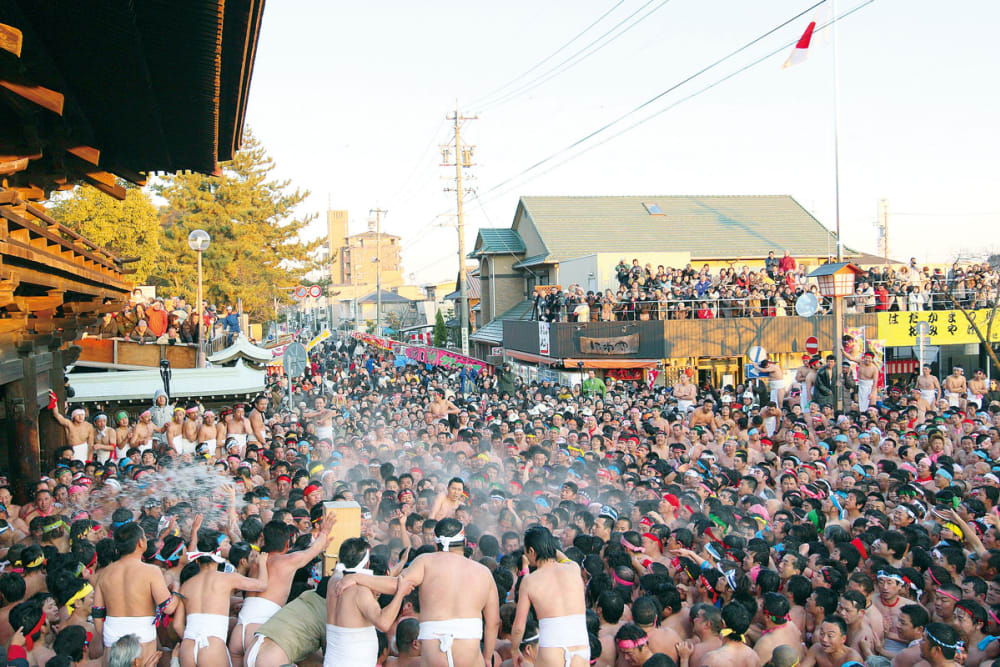
Konomiya Hadaka Matsuri (国府宮はだか祭), often translated as the Naked Man Festival, is an annual Shinto purification ceremony at Owari Okunitama Shrine in Inazawa, Aichi Prefecture, japan. Its dramatic crowd scenes are well known, but the purpose is religious: participants pray to remove misfortune and protect their community. This guide covers the confirmed 2027 date, what the rituals mean, train access from Nagoya, and practical advice for spectators.
Key Takeaways
Konomiya Hadaka Matsuri 2027: Official Date and Timetable
Friday, 19 February 2027 at 3:00 p.m. JST is the scheduled main Naoi Shinji ritual, according to the Owari Okunitama Shrine’s official 2027 programme. The related night purification rite is scheduled for 3:00 a.m. on Saturday, 20 February. Other preparations include the selection of the shin-otoko on 8 February and a large ceremonial rice-cake offering on 18 February.
The festival falls on the thirteenth day of the first lunar month, not a fixed Gregorian date. For comparison, the 2026 main ceremony took place on 1 March. Anyone planning a future visit should check the shrine’s own schedule rather than assume the event is always held on the same February weekend. The main ritual begins at 3:00 p.m., but the most crowded sequence may develop later.
When Should Spectators Arrive?
The shrine says some groups begin approaching with bamboo offerings around noon. Visitors hoping to observe from the public approach should arrive before the busiest period, dress for cold weather and allow extra time for crowded trains. Exact crowd-management rules and road closures are published closer to the event. The ritual is not a reserved-seat performance, so no particular viewing position can be guaranteed.
What Happens at the Naked Man Festival?
Despite the English name, the traditional participants generally wear white fundoshi loincloths and headbands. The festival is more accurately understood as a purification rite known as Naoi Shinji. Shrine tradition traces its origins to prayers against epidemic disease in 767, and the event remains a major community observance in the Owari region.
The Naoi-zasa Bamboo Offerings
Local groups carry decorated bamboo, called naoi-zasa, to the shrine. Cloth strips attached to the bamboo carry prayers for protection and good fortune. Residents who do not join the loincloth procession can participate through these offerings. This broader community role is easy to miss when photographs focus only on the most intense crowd scenes.
The Shin-otoko and the Main Ritual
A man called the shin-otoko or naoinin is chosen before the event and undergoes preparation and seclusion. During the main rite, the gathering seeks to touch him because tradition holds that doing so transfers misfortune away from participants. He eventually reaches the shrine building. This is a demanding religious observance, not an invitation for tourists to enter the crowd.
The Japan National Tourism Organization describes the bamboo processions, the winter atmosphere and the symbolic encounter with the shin-otoko. The language of transferring bad luck reflects a religious belief; it should not be presented as a scientifically proven outcome.
Do Women Participate?
The best-known loincloth procession has traditionally been male, but women and people of all ages have long had roles in the wider purification observance. Recent festivals have also featured women’s groups making designated bamboo offerings. The specific roles and times are set locally, so do not treat all festival activities as interchangeable or assume any visitor may join without approval.
How to Get to Konomiya Shrine from Nagoya
Take the Meitetsu Nagoya Main Line to Konomiya Station (NH47). The shrine is a short walk from the station; the official tourism guide describes it as under ten minutes. Visitors arriving by Shinkansen can use our Nagoya Station guide to plan the transfer to Meitetsu services. Check the Meitetsu Konomiya route information for stopping patterns.
Train or Car?
Rail is usually easier on the festival day because road restrictions and crowds can affect parking and taxis. From central Nagoya, follow station signs and the event-day pedestrian route. Do not assume ordinary navigation apps reflect temporary closures. If travelling by car on another day, check shrine parking arrangements before leaving.
Nearby heritage destinations for a separate day include Kiyosu Castle and Inuyama Castle. Neither is part of the festival itself, but both fit a broader Owari-region itinerary.
Visitor Safety, Etiquette and Photography
Stay Outside the Procession
The shrine publishes safety rules for participants, including warnings about intoxication, bamboo handling and the dangers of falling in a tightly packed crowd. Spectators should remain behind barriers, follow staff and police instructions, and avoid approaching the shin-otoko. Joining the ritual requires local arrangements and preparation; wearing a loincloth is not sufficient.
Dress for February Weather
Bring a warm jacket, comfortable footwear and water. Expect to stand outdoors for an extended period and to encounter queues near the station. Families with young children should choose a quieter public viewing point well away from the central crowd and be ready to leave if conditions become uncomfortable.
Respect the Shrine and Neighbours
Avoid drones, ladders and raised camera platforms; the shrine explicitly prohibits dangerous viewing equipment. Do not block emergency routes, enter restricted spaces, use flash during sensitive rituals or photograph people in private settings without consent. The event takes place in a residential city, not a purpose-built festival arena.
What Else to See Around Nagoya and Aichi
Use Nagoya as a base rather than trying to combine several attractions with the main ceremony. A city-history day might include Nagoya Castle, Tokugawa Art Museum and Osu Kannon. Families can plan another day at the Nagoya City Science Museum or Port of Nagoya Public Aquarium.
For architecture and regional culture, compare Meiji Mura with the Little World Museum of Man. Their opening schedules and ticket policies are separate from Konomiya Shrine, so verify each venue independently.
Other Japanese Festivals to Compare
Regional traditions vary considerably. The Owari Tsushima Tennoh Festival is known for illuminated boats; the Atsuta Festival is another Aichi shrine celebration. The Toyohashi Gion Festival features different processions, while Gujo Odori in neighbouring Gifu is a communal dance festival. For a different shrine context, see our Kanamara Matsuri guide. These are alternatives for planning a cultural trip, not events occurring at Konomiya on the same day.
Frequently Asked Questions
What is the confirmed 2027 festival date?
The main Naoi Shinji ceremony is scheduled for Friday, 19 February 2027 at 3:00 p.m. JST, as published by the shrine. Check again shortly before travelling for access arrangements.
Is it free to watch?
Ordinary roadside viewing is generally not ticketed, but special arrangements, ritual offerings and associated activities may have their own conditions. Check the organiser’s notices rather than assuming every activity is free.
Can overseas visitors participate?
Participation is organised locally and carries safety responsibilities. Visitors should contact the shrine or an authorised group well ahead of time; watching from designated public areas is the straightforward option.
How long should I allow?
Allow at least several hours for travel, waiting and the main ceremony. If you only have a short stop, visiting the shrine on an ordinary day may be more practical than navigating the festival crowd.
Address And Maps Location:
1-1-1 Kounomiya, Inazawa-shi, Aichi-ken
Find Location And Direction On Google Maps
Further official information: Aichi Prefecture tourism listing and Konomiya Shrine’s schedule and visitor rules. The shrine is the authority for the 2027 programme.
Subscribe, follow travelbloggerindonesia.com