The center of everything, once upon a time in Edo
Edo Castle holds a significant place in Japanese history as the residence of the powerful Tokugawa shoguns for 260 years. It served as the center of japan‘s politics and witnessed numerous intrigues. Today, the site is home to the Imperial Family’s palace and residence, along with serene gardens and several museums that are open to the public.
Quick Facts about Edo Castle:
– The castle grounds once stretched to the Marunouchi District and Tokyo Station.
– Warlord Tokugawa Ieyasu took possession of the castle in 1590.
How to Get There:
Access to certain sections of the grounds is restricted and requires reservations. To explore the areas open to the public, there are three main entrance gates to choose from:
1. Otemon Gate:
– Accessible from several stations.
– Approximately a five-minute walk from Otemachi Station.
– Around 10-minutes walk from Nijubashi-mae Station.
– Approximately a 15-minutes walk from Tokyo Station’s Marunouchi North Exit.
2. Hirakawamon Gate:
– Located toward the northern side of the grounds.
– Around a five-minute walk from Takebashi Station.
3. Kita-hanebashimon Gate:
– Not far from Hirakawamon Gate.
– Approximately a five-minute walk from Takebashi Station.
A city within a city:
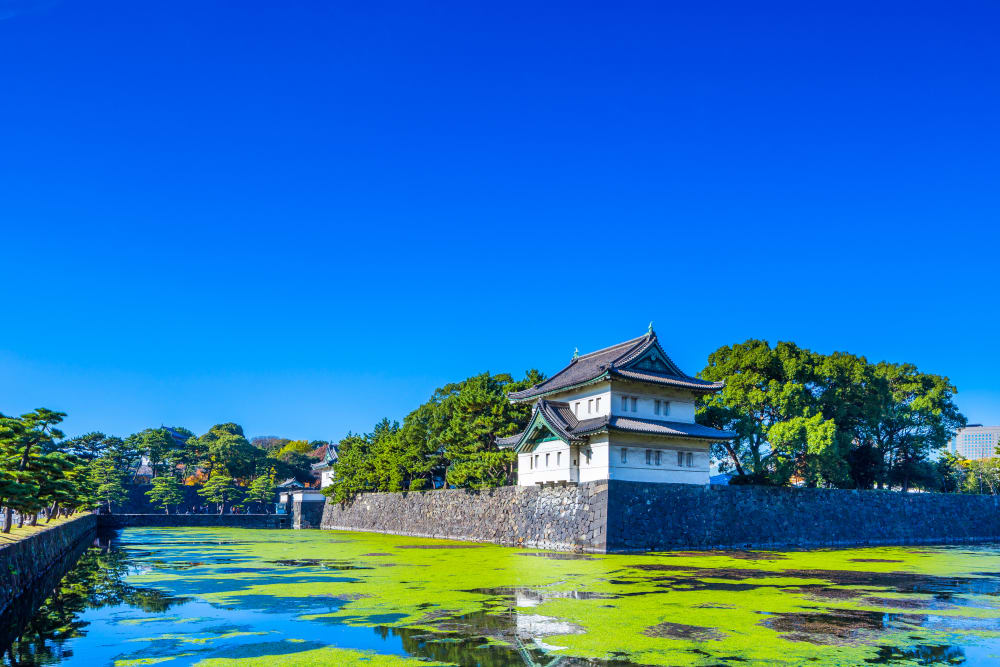
Although the main building of Edo Castle sadly burned down in 1863, remnants of the fortress can still be seen, giving a sense of its sheer size. The moats, thick walls, bridges, and defenses that remain showcase its grandeur. One of the surviving structures is the Fujimi-yagura watchtower, built in 1659 to protect the southern side of the grounds.
It’s fascinating to note that the palace complex, which seems vast today, was once even larger. Tokyo Station and the Marunouchi area were once part of the castle grounds. During the peak of the Tokugawa shogunate’s military power, the inner compound alone spanned eight kilometers in circumference, with the outer compound extending to around 16 kilometers. Even the manmade island of Odaiba, now a popular shopping area, was once part of the castle’s defense system.
From military stronghold to peaceful park:
The current Imperial Palace was not constructed on the same spot as Edo Castle’s main building. As a result, visitors can still witness the ruins of what was once the largest castle in Japan. While exploring the grounds, one can marvel at the impressive walls and moats of Edo Castle, which now enclose the East Gardens of the Imperial Palace. Visitors can even climb the foundations of Edo Castle’s tower, gaining a unique perspective on its former glory.
Kitanomaru National Garden and its many attractions:
Apart from the elegant Japanese-style gardens, Kitanomaru National Garden houses several notable attractions. Visitors can explore the Nippon Budokan, Science Museum, and National Museum of Modern Art Tokyo, all of which were once part of the old castle’s grounds. Additionally, the Chidorigafuchi Park walking path offers a picturesque experience.
In conclusion, Edo Castle holds immense historical significance and remains a captivating destination in Tokyo. From its days as the center of Japan’s politics to its transformation into a peaceful park, the castle’s remnants and surrounding attractions offer visitors a glimpse into the rich heritage of Japan. Exploring the castle grounds, museums, and gardens is a must for history enthusiasts and those seeking a deeper understanding of Tokyo’s past.
Address And Maps Location:
1-1 Chiyoda, Chiyoda-ku, Tokyo-to
Find Location And Direction On Google Maps
Subscribe, follow travelbloggerindonesia.com