Certainly! Below is the rewritten version of the provided text in English, followed by an expanded formal article with detailed subheadings, formatted with ‘Heading 2’ and ‘Heading 3’.
Rewritten Text:
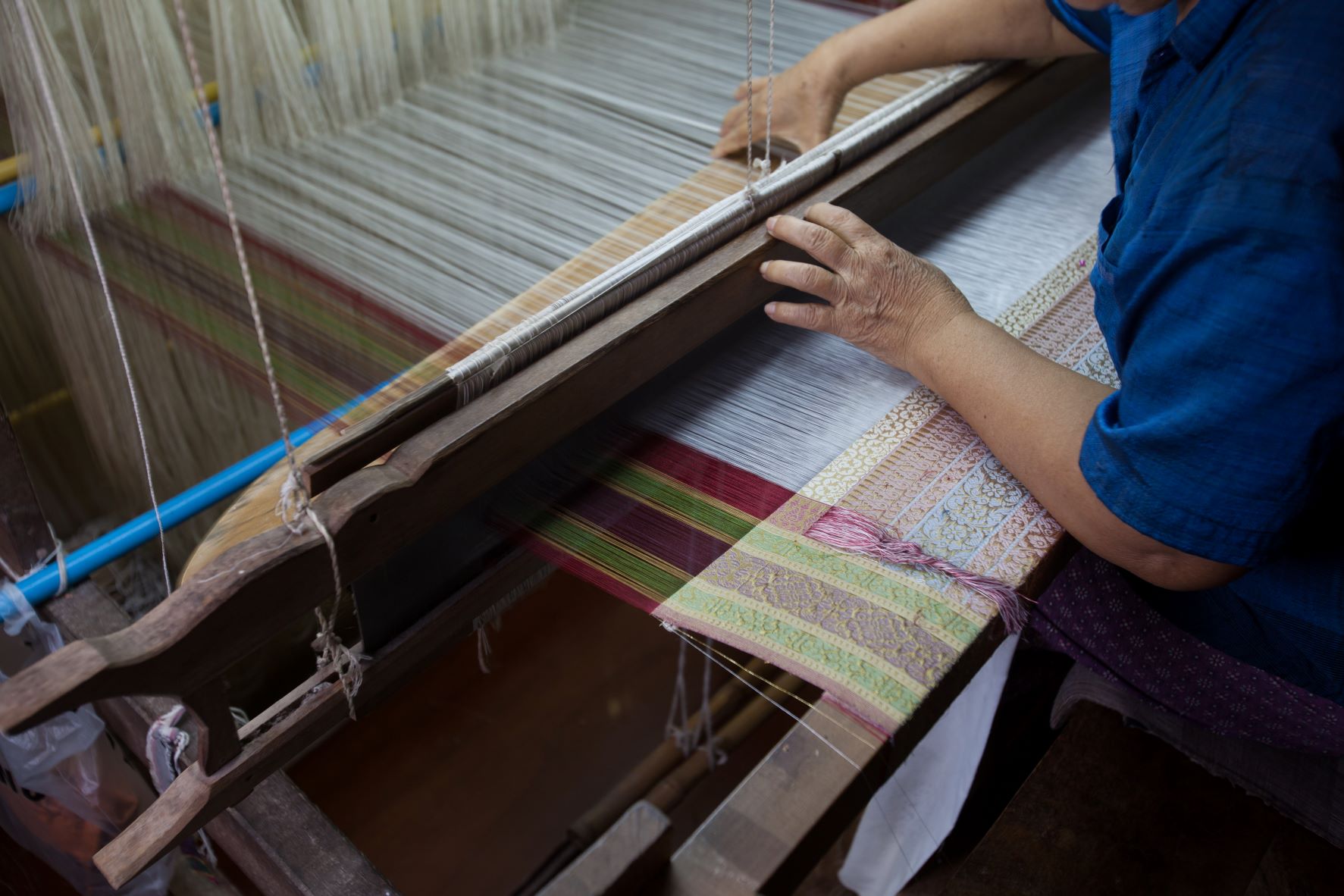
The Ancient Yok Thong Silk Weaving Village, located in Ban Tha Sawang, Tambon Tha Sawang, was established through the artistic and handicraft initiatives of the Yokthong Silk Weaving Group, "Chansoma." This group has played a significant role in preserving and reviving the sophisticated weaving techniques once used by the Thai royal court. The community of Ban Tha Sawang collaborates to create fabrics featuring intricate patterns that blend regal weaving styles with traditional folk methods. As a result, these textiles have become renowned worldwide for their captivating beauty.
One of the unique characteristics of this golden silk is the meticulous selection of fine, lightweight silk, which undergoes a natural bleaching, boiling, and dyeing process using three primary colors: red from shellac, yellow from the thorny cockspur plant, and indigo from indigo seeds. The creation of the golden silk brocade involves rolling the silk into thin threads, spinning it with yarn, and employing a special weft to craft the pattern. The process requires 1,416 heddles, usually placed on the ground due to height limitations. Consequently, the soil must be excavated to a depth of 2-3 meters to accommodate the heddle’s length and allow workers to stand in the pit and insert the heddle. Given the extensive number of heddles, 4-5 weavers are needed—2-3 to assist with lifting, one to insert the heddle, and one to weave. Due to the technical intricacy, only 4-5 centimeters of fabric can be produced daily.
Detailed Article:
Key Takeaways
The Artistry of Yok Thong Silk Weaving
Introduction to Ban Tha Sawang
The Ancient Yok Thong Silk Weaving Village is nestled in Ban Tha Sawang, Tambon Tha Sawang. This village is a testament to the rich cultural heritage and the remarkable craftsmanship of the Yokthong Silk Weaving Group, known as "Chansoma." Through their dedication, they have successfully preserved and revitalized the sophisticated weaving techniques once exclusive to the Thai royal court. The collective efforts of the Ban Tha Sawang villagers have resulted in the creation of fabrics that are not only intricate in design but also a harmonious blend of royal and folk weaving techniques. Consequently, these textiles have achieved global recognition for their exquisite allure.
The Craft of Silk Selection and Dyeing
One of the most distinct features of the golden silk from Ban Tha Sawang is the careful selection of fine, lightweight silk. The silk undergoes a series of natural processes—bleaching, boiling, and dyeing—to achieve its signature colors. The dyeing process employs three primary colors derived from natural sources: the vibrant red from shellac, the bright yellow from the thorny cockspur plant, and the deep indigo from indigo seeds. This natural dyeing technique not only enhances the silk’s visual appeal but also ensures its environmental sustainability.
The Complex Weaving Process
The creation of the golden silk brocade is a meticulous process that involves rolling silk into thin threads and spinning it with yarn. A special weft is used to create the intricate patterns that define Yok Thong silk. The weaving process necessitates the use of 1,416 heddles, typically arranged on the ground due to height constraints. To accommodate the heddles, the ground is excavated to a depth of 2-3 meters, allowing workers to stand in the pit and insert the heddles. The sheer number of heddles requires a team of 4-5 weavers: 2-3 to assist in lifting the heddles, one to insert them, and another to weave. Despite the labor-intensive nature of the process, it yields only 4-5 centimeters of fabric per day, underscoring the technical complexity and dedication involved.
The Cultural and Economic Significance
The Yok Thong silk weaving craft is not merely a display of skill; it is a cultural legacy that has significant economic implications for the Ban Tha Sawang community. The global recognition of these textiles has transformed the village into a cultural and tourist attraction, drawing visitors from around the world eager to witness the intricate weaving process firsthand. This influx of tourism has provided a vital source of income for the villagers, ensuring the sustainability of their craft.
Preservation of Traditional Techniques
The Yokthong Silk Weaving Group, "Chansoma," is committed to preserving the traditional weaving techniques that have been passed down through generations. Their efforts to maintain these ancient methods are crucial in preserving the cultural identity of the region. The group’s dedication to authenticity ensures that each piece of fabric not only represents a work of art but also a piece of history.
Challenges and Future Prospects
Despite the success and recognition, the Yok Thong silk weaving craft faces several challenges. The labor-intensive nature of the weaving process and the need for skilled weavers pose significant hurdles. Additionally, the competition from machine-made fabrics presents a challenge to the traditional craft. However, the continued interest in authentic, handmade textiles and the support from cultural preservation initiatives offer hope for the future of Yok Thong silk weaving.
Conclusion
The Ancient Yok Thong Silk Weaving Village in Ban Tha Sawang stands as a beacon of cultural heritage and artistic excellence. The villagers’ dedication to preserving and promoting their craft has not only enriched their community but has also captivated the world. As we look to the future, the continued support for and interest in traditional crafts like Yok Thong silk weaving will be essential in ensuring their survival for generations to come.
This detailed article covers various aspects of the Yok Thong silk weaving tradition, providing a comprehensive understanding of its significance and complexity.
Address And Location:
Tha Sawang Mueang Surin Surin 32000